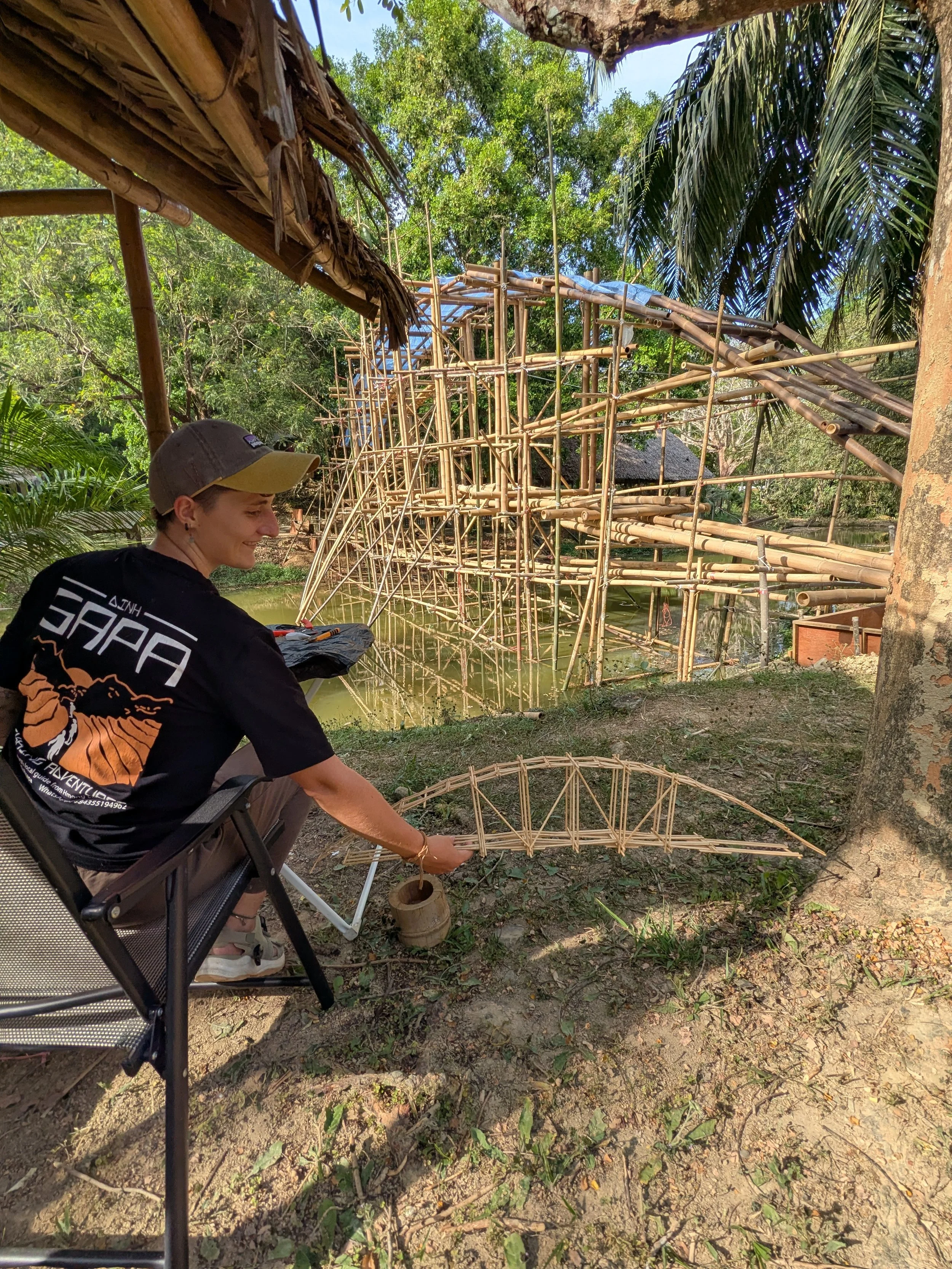
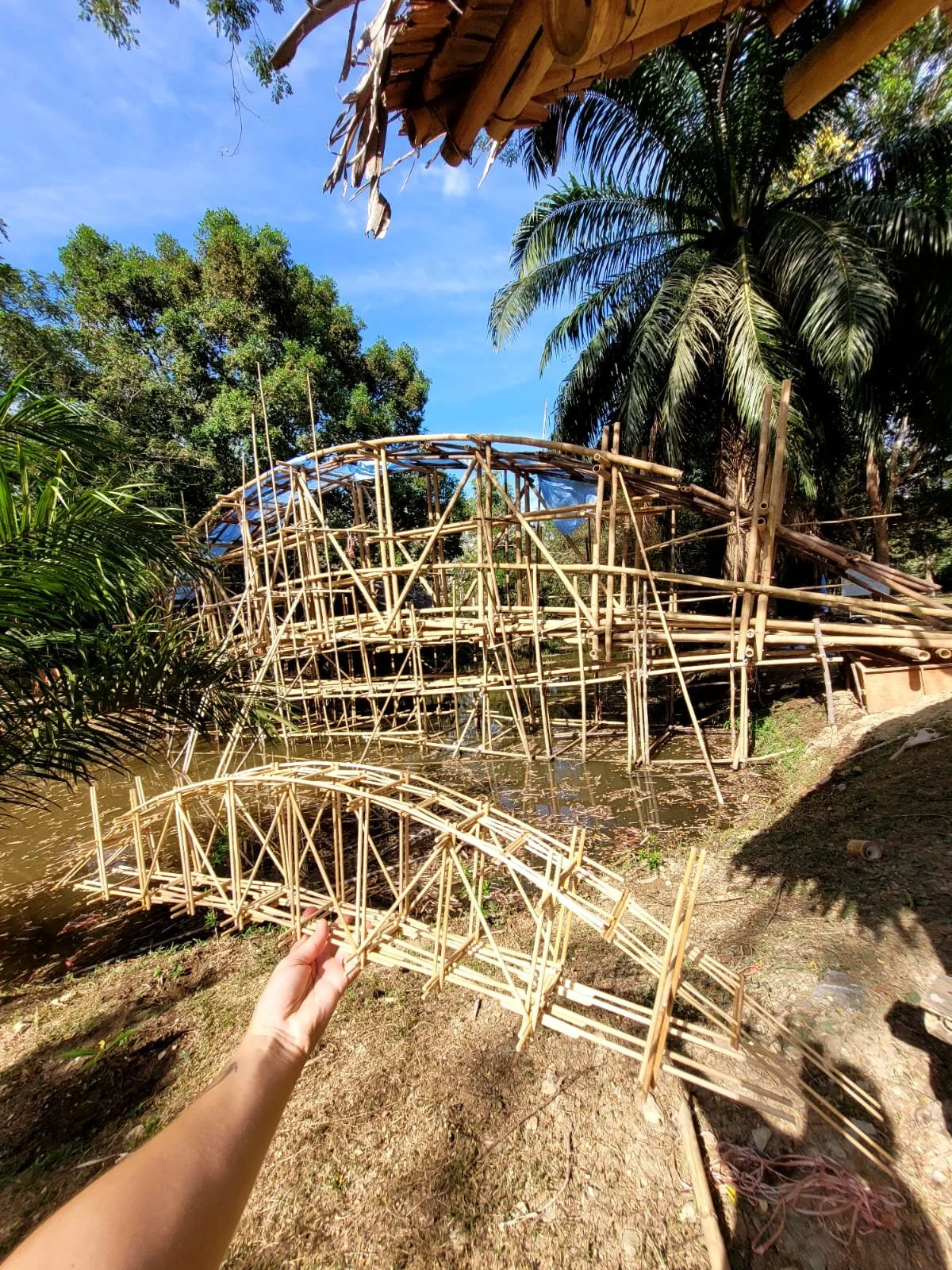
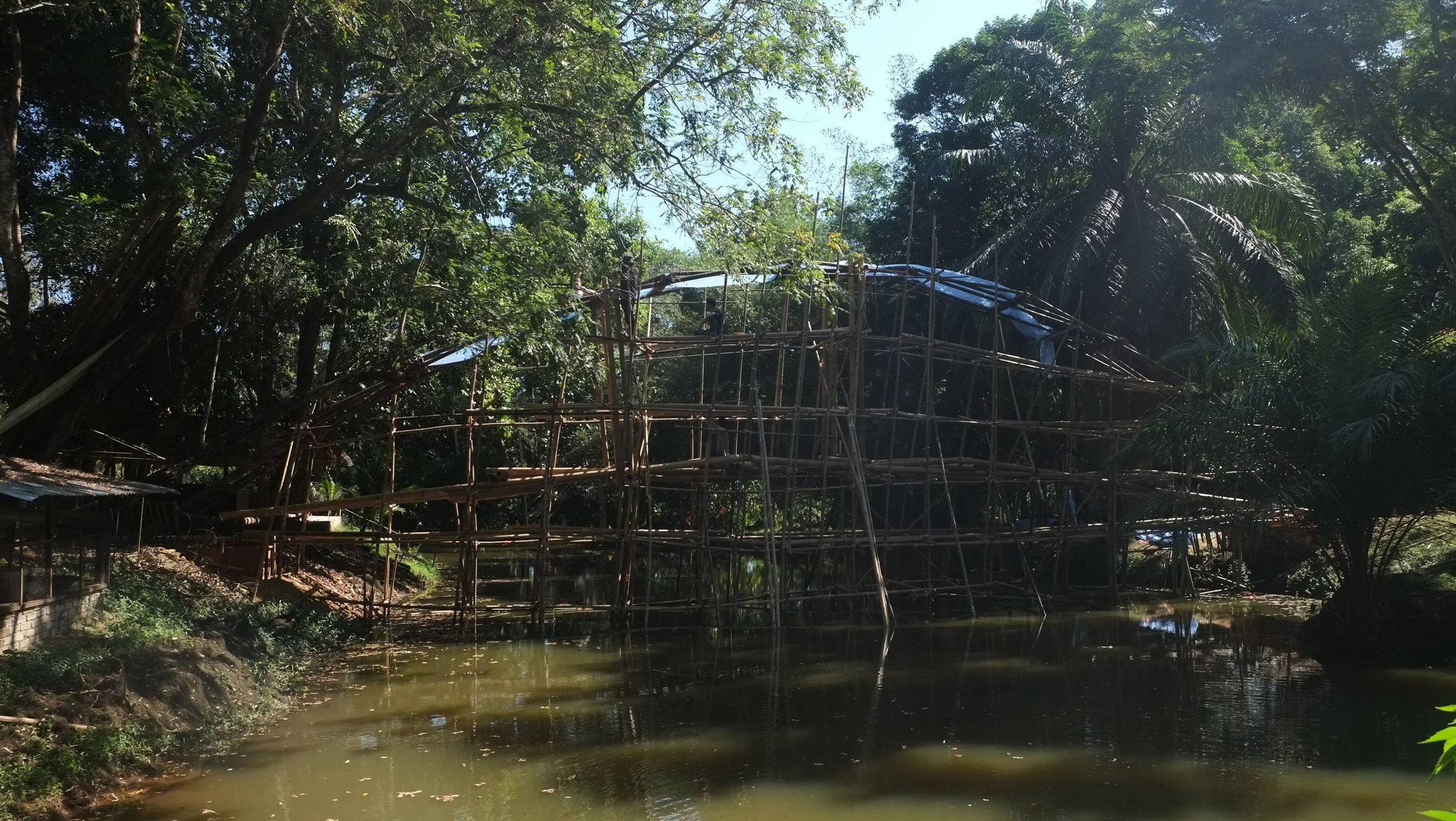
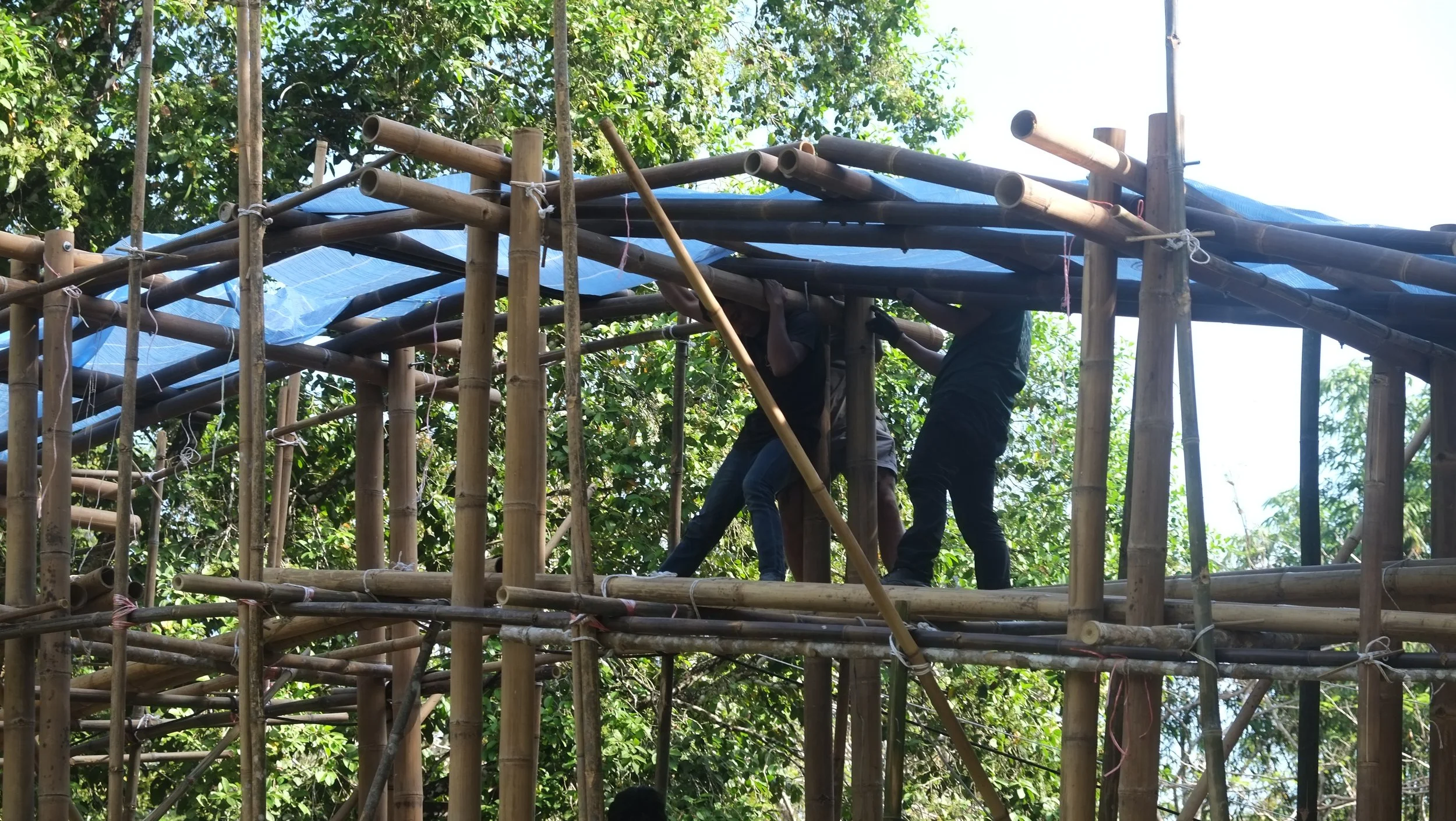
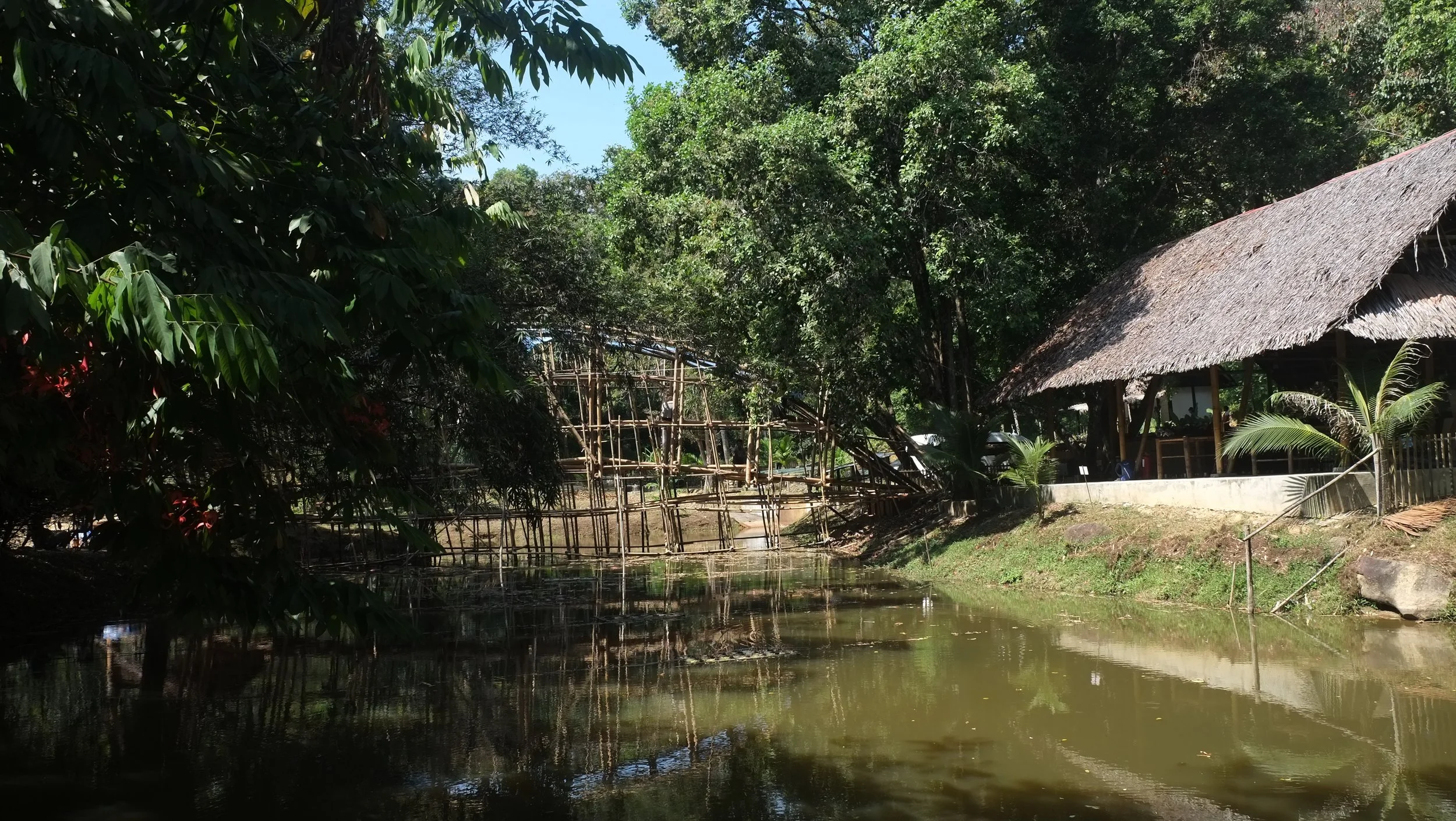
The Bamboo Bridge at Buluh & Tebing is a pioneering structure, recognised as the first reciprocal bridge in the world made entirely from bamboo.
Inspired by Leonardo da Vinci’s reciprocal bridge concept, the design relies on mutual support between structural members, allowing the bridge to stand without nails, bolts, or permanent fasteners.
Bamboo Bridge, Buluh &Tebing
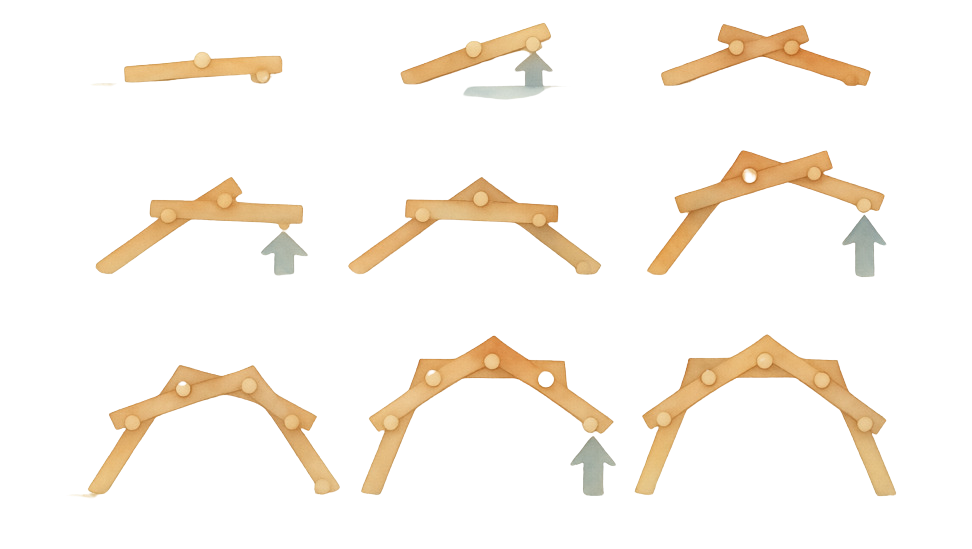
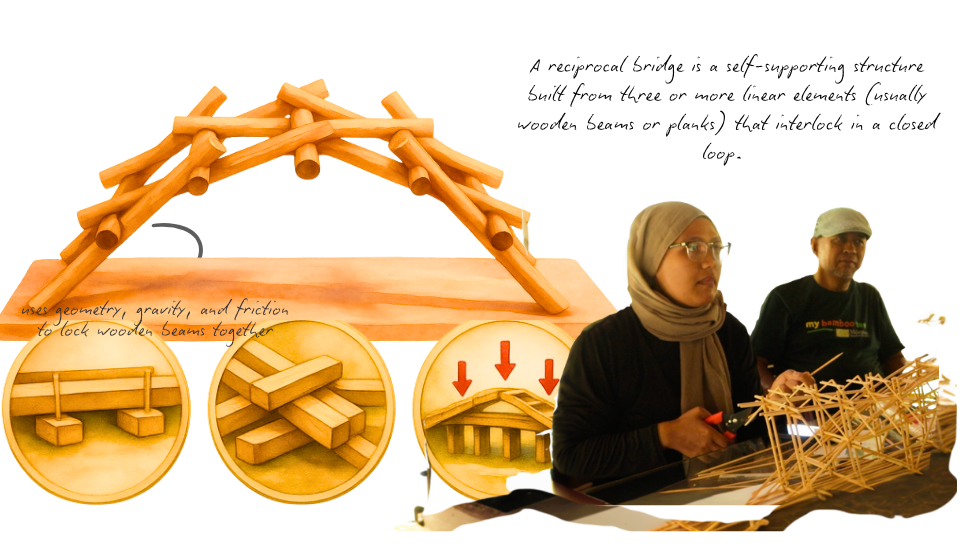
Leonardo da Vinci’s reciprocal bridge concept
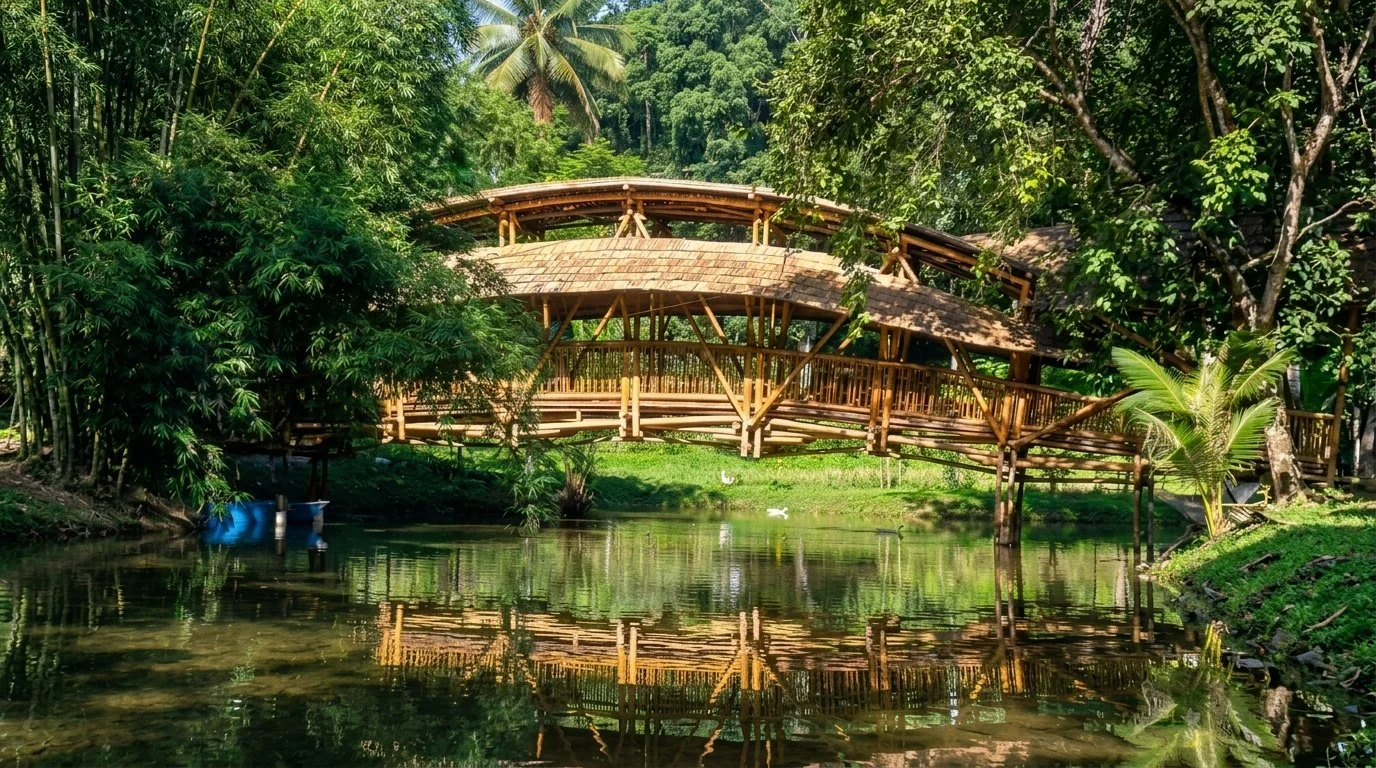
To our knowledge, the bridge represents a rare example of reciprocal arch construction using bamboo at this scale, demonstrating the potential of bamboo as a structural material for innovative contemporary architecture.
Inspired by the principles of reciprocal frame construction, the bridge is formed through a network of interlocking bamboo members that work together to distribute structural loads and create a self-supporting arch. This approach allows the structure to achieve both strength and stability while showcasing the natural properties of bamboo.
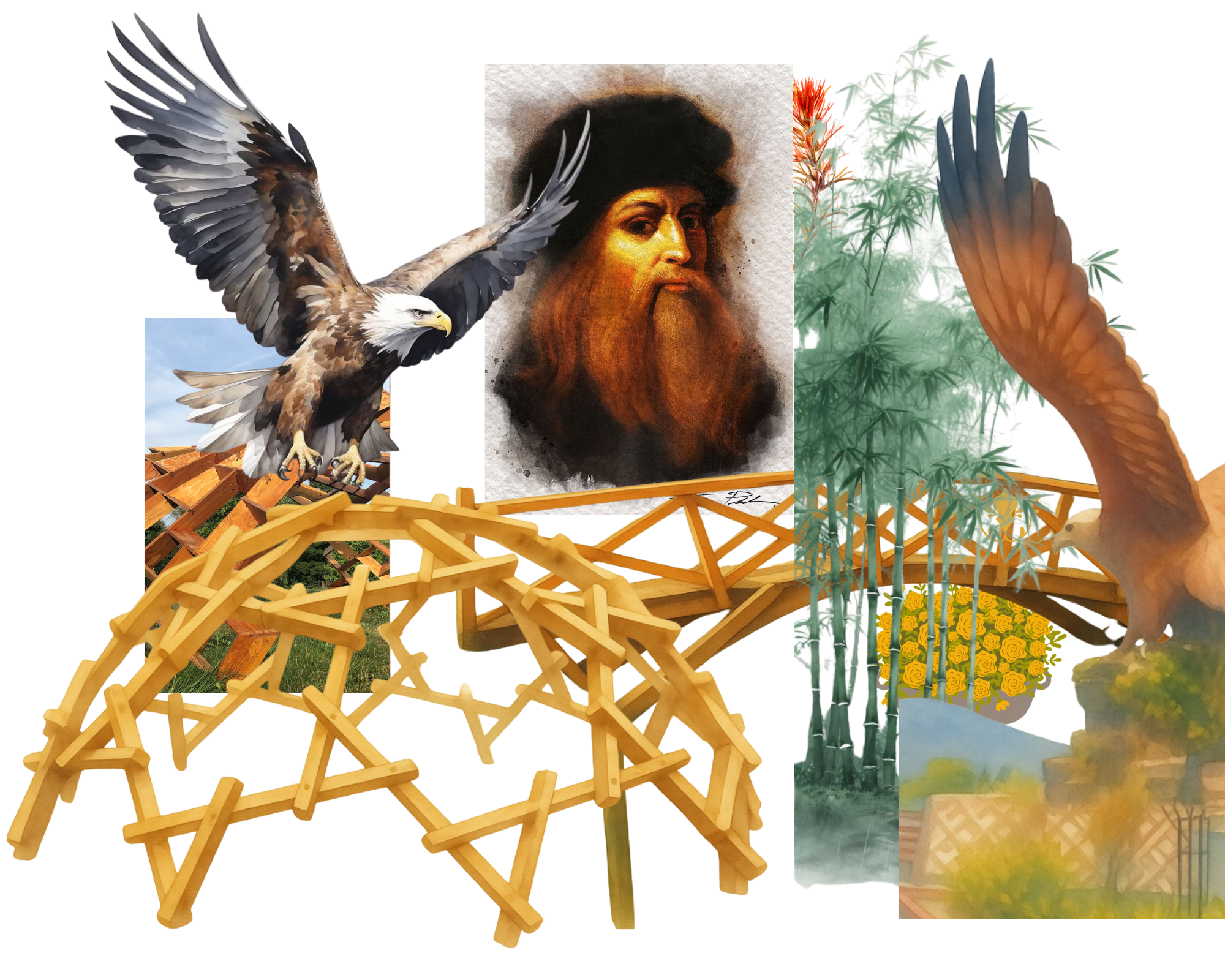
Moodboard 1
More than simply a crossing, the bridge represents an exploration of what is possible with bamboo,combining traditional material knowledge, structural ingenuity, craftsmanship, and sustainable design in a single landmark structure.
The Bamboo Bridge at Buluh & Tebing stands as an example of how locally available, renewable materials can be transformed into ambitious architectural structures, while creating opportunities for research, skills development, and the advancement of bamboo construction technology.
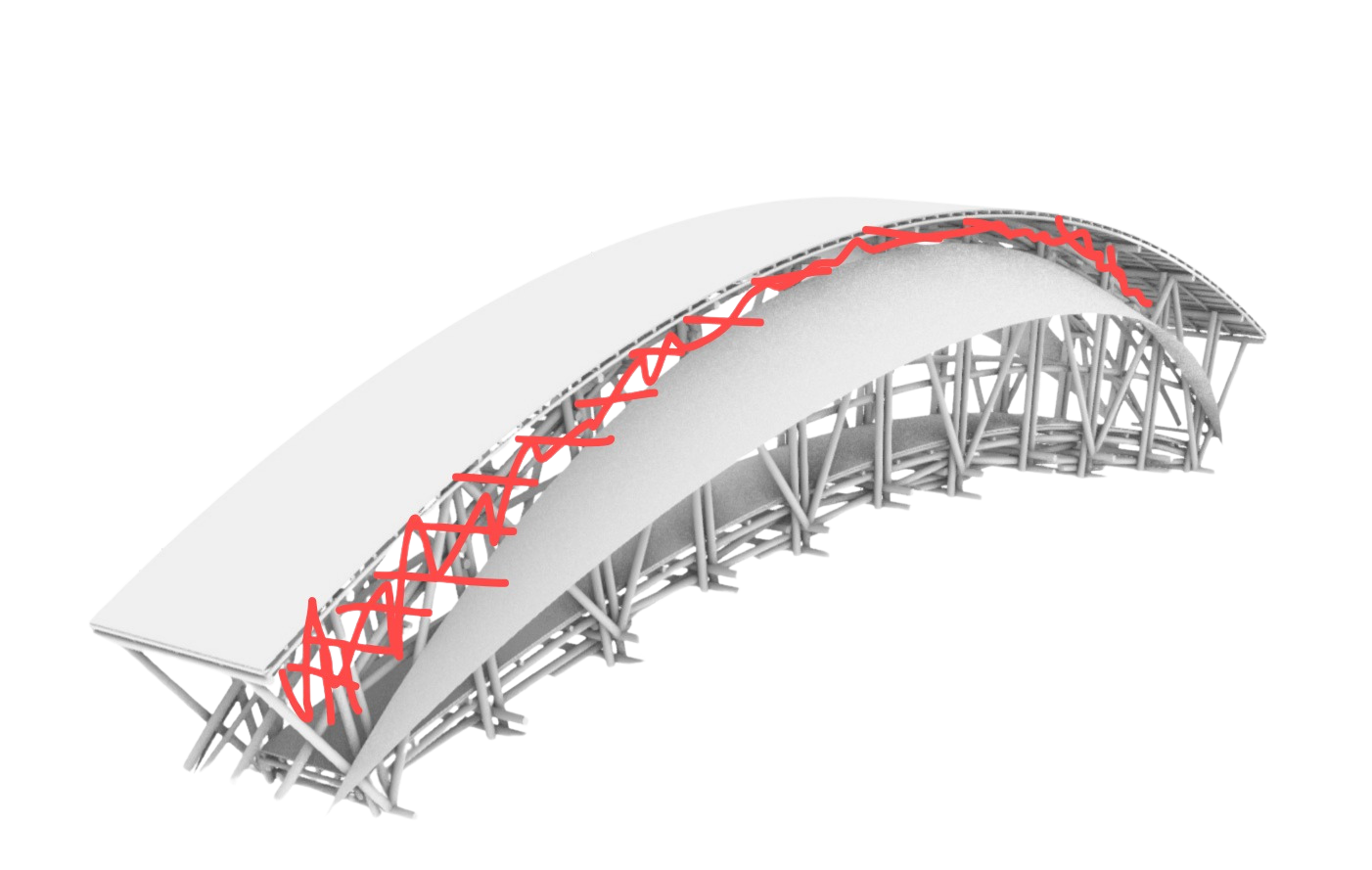
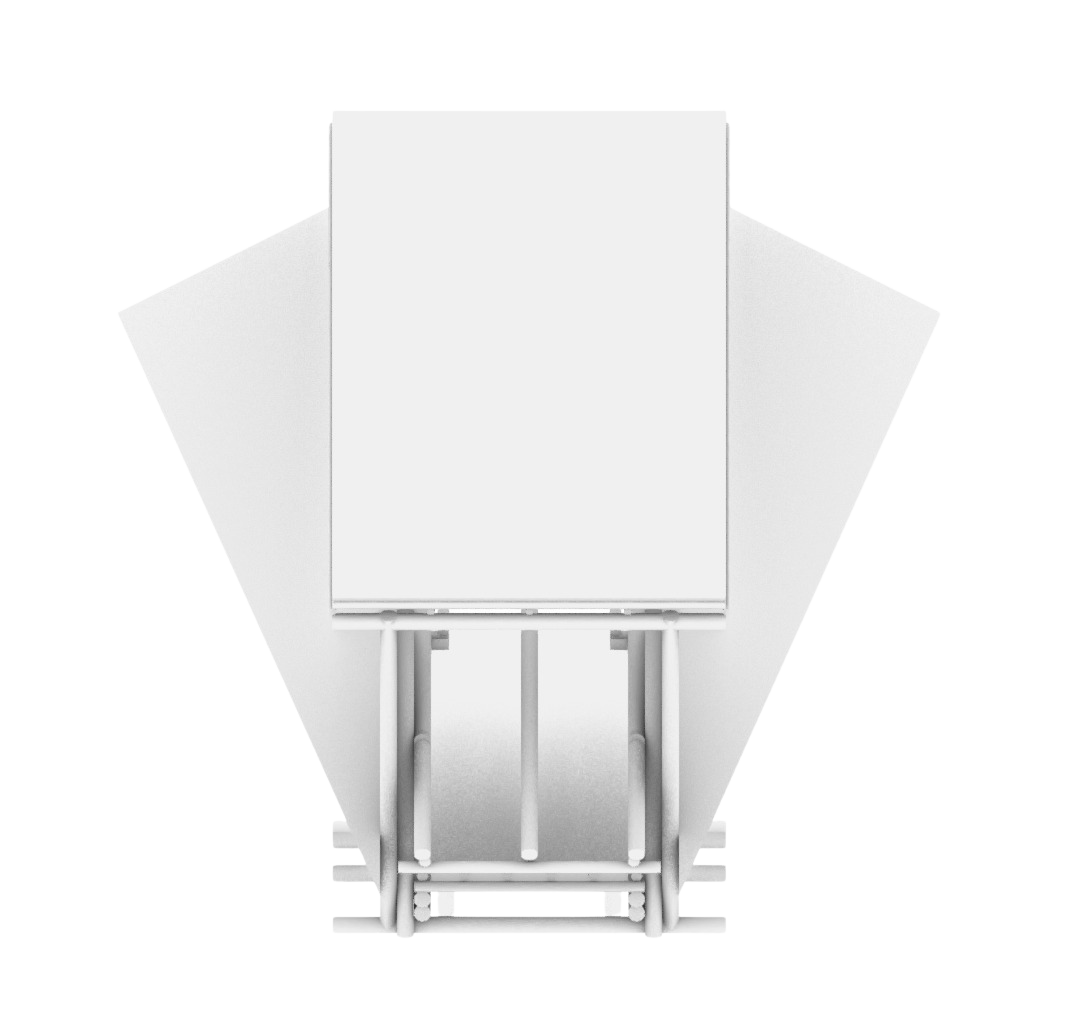
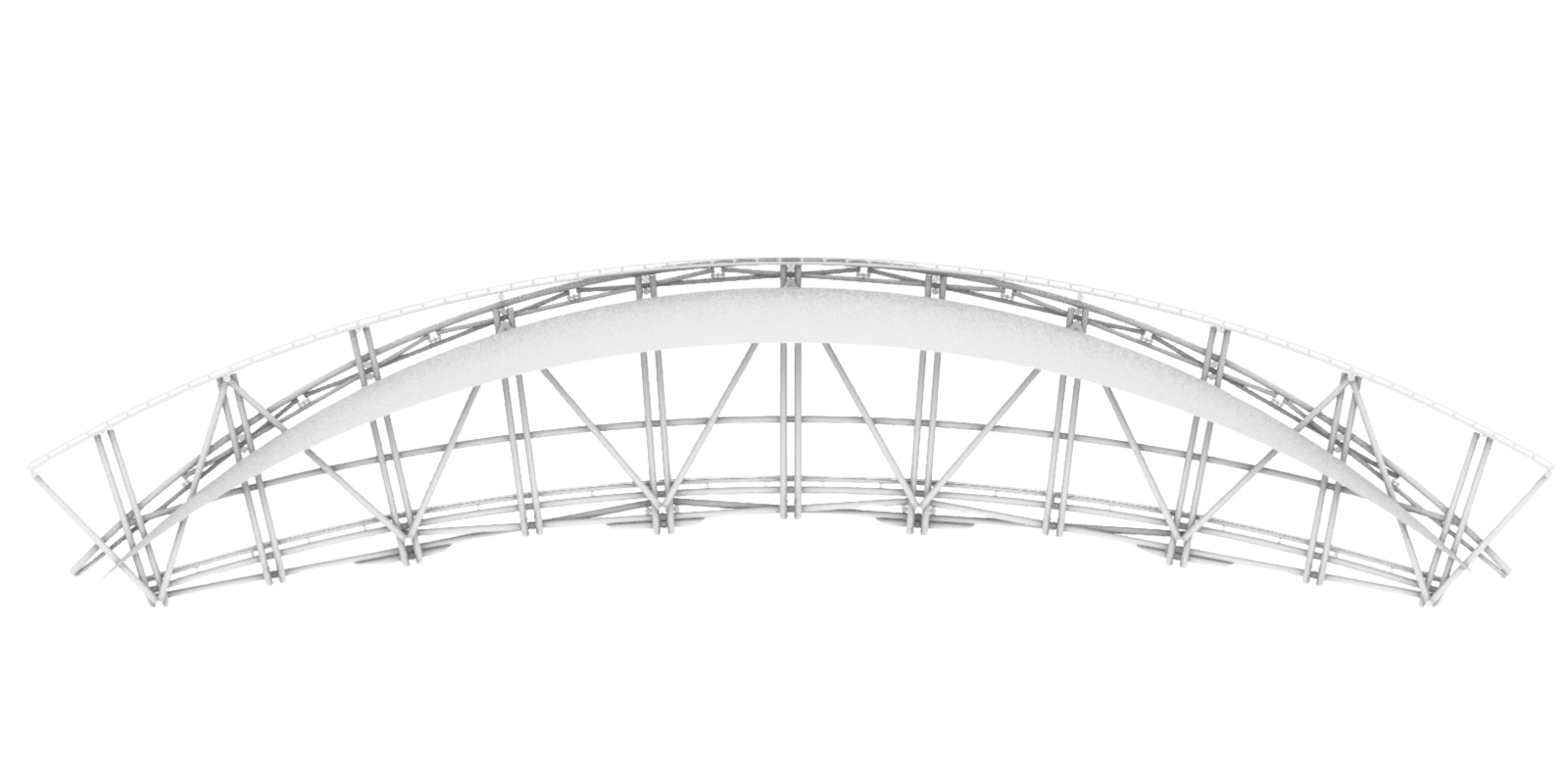
Plan and elevation
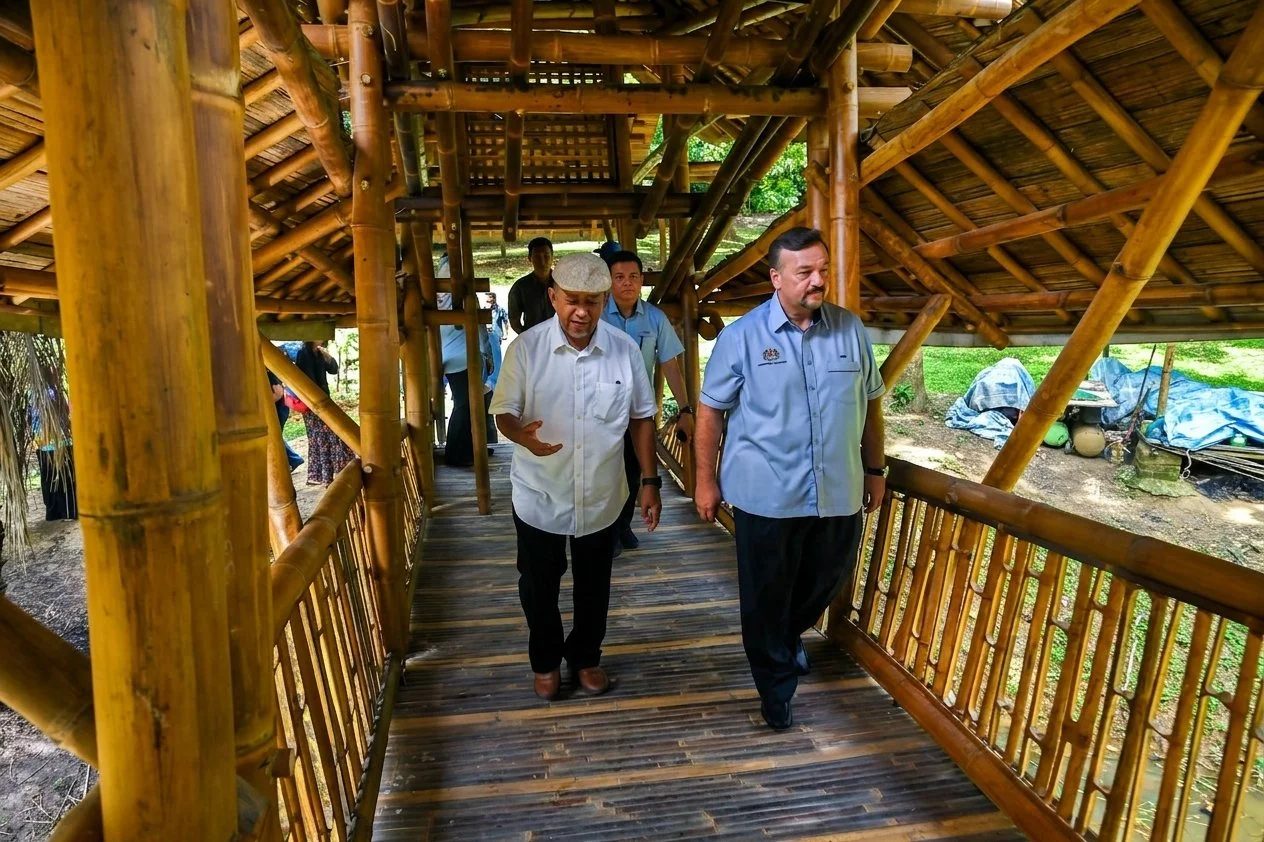
Officiated in 2026 by YB Senator Datuk Seri Amir Hamzah bin Azizan, Minister of Finance II and Co-Chairman of the Langkawi Development Authority (LADA), this bridge showcases sustainable design rooted in Langkawi's status as home to one of Malaysia's richest concentrations of bamboo species.
Blending traditional craftsmanship with modern eco-tourism appeal, the Bamboo Bridge offers visitors a unique walkway experience surrounded by lush greenery, reflecting Langkawi's commitment to green infrastructure and community-based tourism.
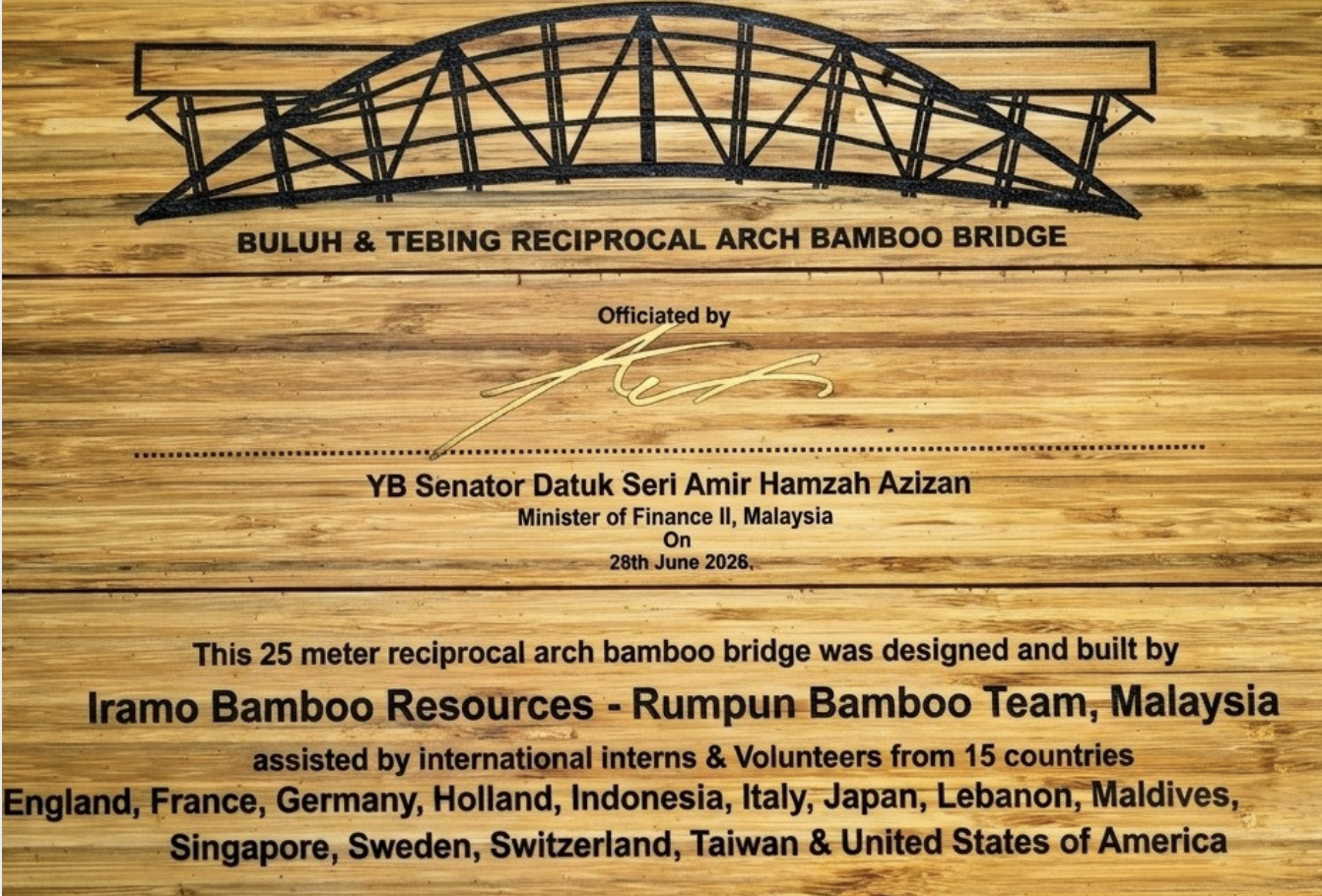
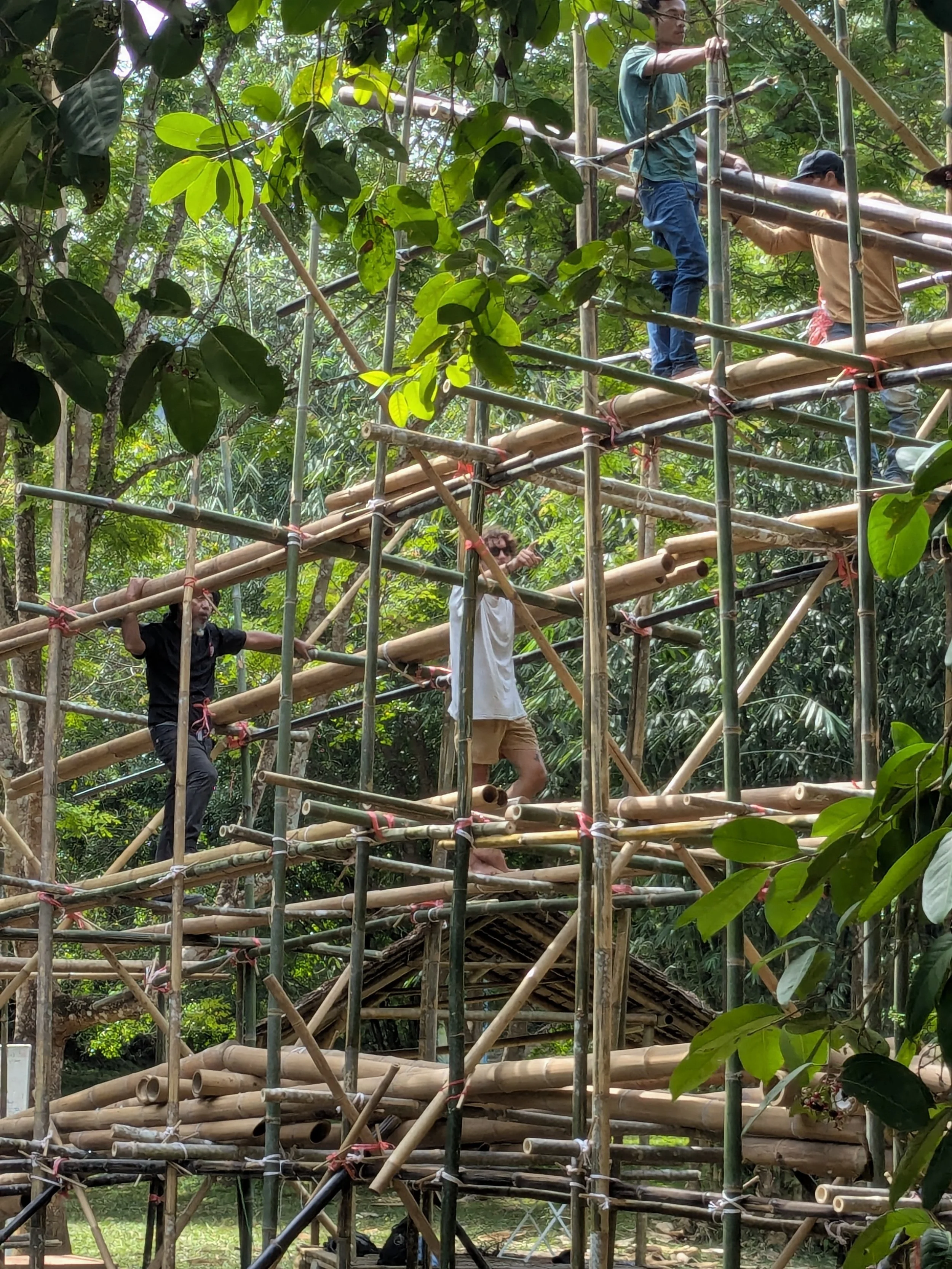
The project was brought to life with the help of 15 volunteers from around the world, who came together to learn, build, and share their skills. Their collective effort transformed the bridge into more than just a structure—it became a symbol of international collaboration, community spirit, and our shared connection with nature.
Built with bamboo and shaped by many hands, the Bamboo Bridge represents what can happen when people come together with a common purpose: to build sustainably, learn from one another, and create something meaningful for the future.